How to Read a Museum Painting Label
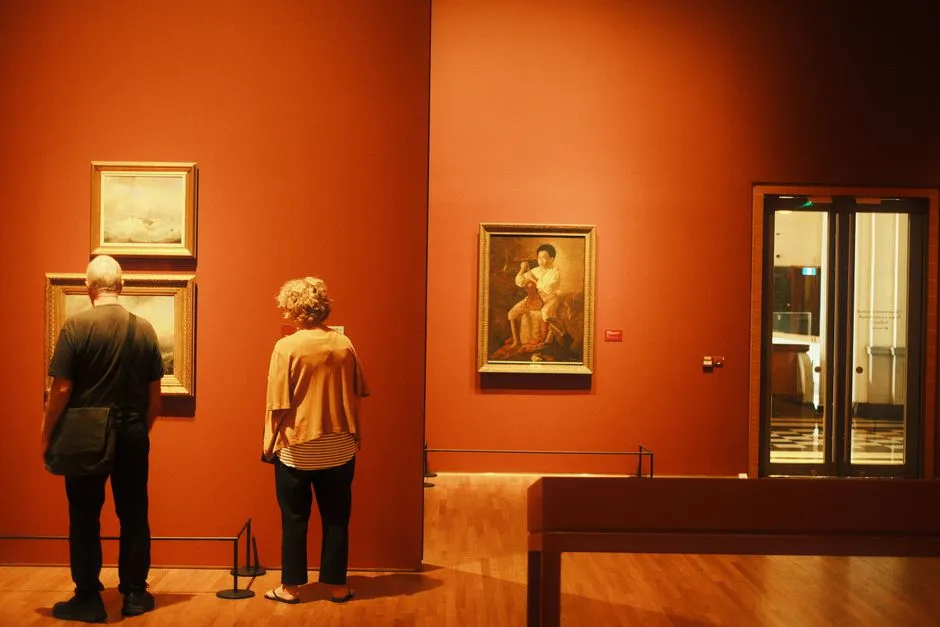
Read the object fields before the paragraph
Begin a museum painting label with the maker or attribution, title, date, medium, dimensions, credit line, and accession number. These fields tell you what the museum currently calls the object and how it catalogs it. Then read the interpretive paragraph and look back at the painting.
A label is compressed scholarship, not the painting's legal counsel. Small type can still contain large uncertainty.
Maker or attribution
The first line may name an artist, culture, workshop, school, or another attribution. Read every qualifier exactly. “Attributed to,” “workshop of,” “circle of,” “follower of,” and “formerly attributed to” are not decorative warm-up phrases; institutions define and use them with specific scholarly caution.
Do not strip the qualifier when taking notes. Search the museum's catalogue for its definition and attribution history. Authorship can change as provenance, conservation, technical imaging, documents, and comparative scholarship develop.
The museum-reading guides treat the institution's wording as a current conclusion, not an eternal signature supplied by the wall.
Title and subject
A title may have been chosen by the artist, recorded in an early inventory, assigned by a dealer or collector, or created later as a descriptive convenience. A title in italics does not guarantee the artist used those words.
Ask what the title actually supplies. Does it identify a person, sacred or literary subject, place, event, genre, or only a visual description? Then distinguish that information from what you observe. “Portrait of a Merchant” may reflect documented identity, traditional identification, or a modern descriptive title—the full object record should clarify when known.
Date and uncertainty
A single year can come from a dated inscription or reliable documentation, but it can also reflect scholarly assessment. Date ranges, question marks, and qualifiers such as circa communicate uncertainty. Circa means approximately.
Preserve that uncertainty in your notes. Do not turn “about 1520” into “1520” merely because the zero looks lonely. Look for the basis in the collection record or catalogue: documents, style, materials, tree-ring analysis, inscriptions, or comparison may contribute.
Medium and support
The medium line may read “oil on canvas,” “tempera on panel,” or another concise description. It identifies key material and support information, but not necessarily every pigment, binder, preparation layer, later coating, lining, transfer, restoration, or mixed technique.
Museum terminology can change as analysis improves. “Oil” may describe the main binding medium without providing a recipe. “Panel” does not name the wood species unless the record states it. Never infer an exact material from color alone.
Our explainer on underdrawing shows why preparation and hidden planning may require technical imaging beyond what the label can hold.
Dimensions and frame
Check whether dimensions describe the painted support, image area, object with frame, or another configuration. Museums usually state height before width, but formats and units vary. Sculpture and complex objects may add depth.
Dimensions change the work's relationship to the viewer. A reproduction on a phone can make a miniature and a monumental canvas equally thumb-sized, which is efficient and wildly misleading. Step back and notice how the actual scale directs looking.
Credit line and accession number
The credit line explains how the museum holds or received the work, often naming a donor, bequest, purchase fund, or lender. It is not the entire provenance, which traces ownership or custody across time.
The accession number is the object's institutional identifier. Search it in the museum's collection database; it is usually more reliable than title alone when several works share a name. The online record may include:
- Larger images and alternate views
- Expanded object details
- Provenance
- Exhibition and publication history
- Conservation or technical research
- Attribution and title notes
- Rights and reproduction information
Number formats differ among museums, so do not decode one institution's system using another's conventions.
Return to the painting with one question
After reading, look for one claim the label helps you test: a compositional change, repeated gesture, material effect, viewing angle, historical function, or relationship to another work. Separate what you see from what the label tells you and what you infer.
If the paragraph emphasizes history, spend a minute on paint. If it emphasizes technique, notice subject and display. If it tells you exactly where to look, glance elsewhere too. The label should deepen attention, not stand between you and the object like a very informed parking citation.